
- Home
- School Life
- Special Educational Needs & Disabilities SEND
Special Educational Needs & Disabilities SEND
Special Educational Needs & Disabilities (SEND) at Abbey Manor College
Our SEN Co-ordinators (SENCo) for the school are –
Ms Nicola Keast - Deputy Headteacher/SENCo
n.keast@abbeymanorcollege.com
Ms Ansonette Swart - English Teacher/Deputy SENCo
a.swart@abbeymanorcollege.com
The guidance set out in the SEN Code of Practice specifies that: ‘A child or young person has SEND if they have learning difficulties or a disability, which call for specific educational provision to be made for him or her’ including:
- a significantly greater difficulty in learning than the majority of children of the same age, or
- a disability which prevents or hinders them from making use of educational facilities that are generally provided for children of the same age
We believe that all students, including those with special educational needs and disabilities (SEND), should have a universal offer of high-quality teaching. This is referred to in the SEN Code of Practice as Quality First Teaching.
|
"Many pupils in the school have special educational needs and/or disabilities (SEND). Sometimes, pupils’ needs are assessed and identified before they join the school. When this is not the case, leaders use initial assessments effectively to find out what pupils need help with. Leaders share intervention plans with teachers and teaching assistants so that pupils receive the support they need. Pupils with SEND study the full range of subjects." Ofsted, 2022 |

SEND at Abbey Manor College
High-quality teaching is our first response to meeting the needs of all students, including those with SEND.
Teaching is well planned, highly engaging and differentiated, with clear objectives, effective questioning and strong expectations for participation, independence and responsibility for learning.
Teachers are accountable for the progress and development of all students, including those receiving additional support. Teaching quality and student progress are regularly reviewed through observations, work scrutiny, progress meetings and behaviour monitoring. Staff receive ongoing professional development to strengthen inclusive practice and SEND expertise.
Students’ starting points are carefully considered, drawing on information from previous schools, professionals, and assessment reports. Where progress is less marked than expected, timely, targeted support is implemented. Progress is viewed holistically, including academic achievement and wider social, emotional and developmental needs.
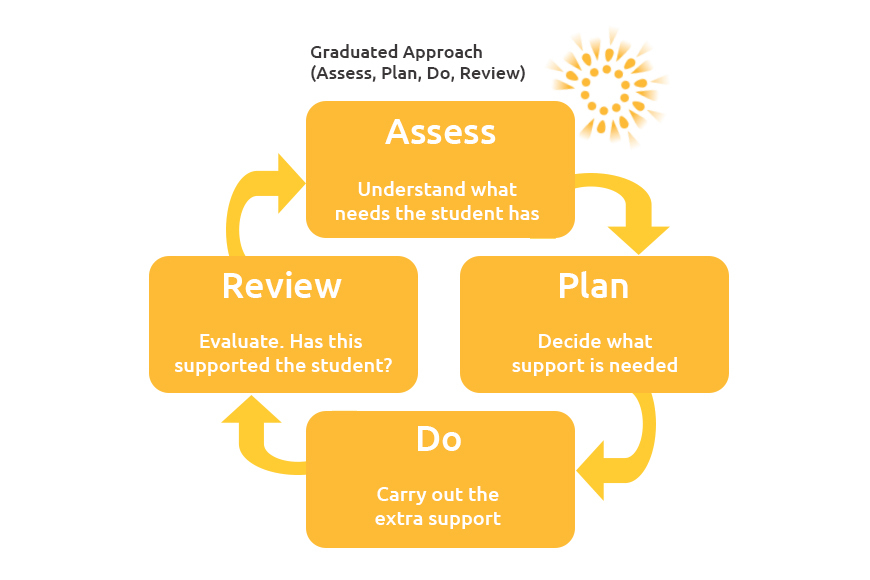
For students identified with SEND, barriers to learning are addressed through a graduated approach (assess, plan, do, review), ensuring provision is responsive and outcomes-focused.
Exam Access Arrangements
All students are assessed by a specialist before national examinations to determine eligibility for access arrangements, such as additional time, a reader or a scribe.
Transition and Preparing for Adulthood
We provide personalised transition support at key points, including reintegration to mainstream settings and progression to post-16 pathways. In Key Stage 4, greater emphasis is placed on stability, readiness for adulthood, and preparation for further education, training, or employment.
Our Special Educational Needs & Disability PolicyOur SEND Information for ParentsSEND Information Report PolicyAccessibility-Policy-2025-2026.doc